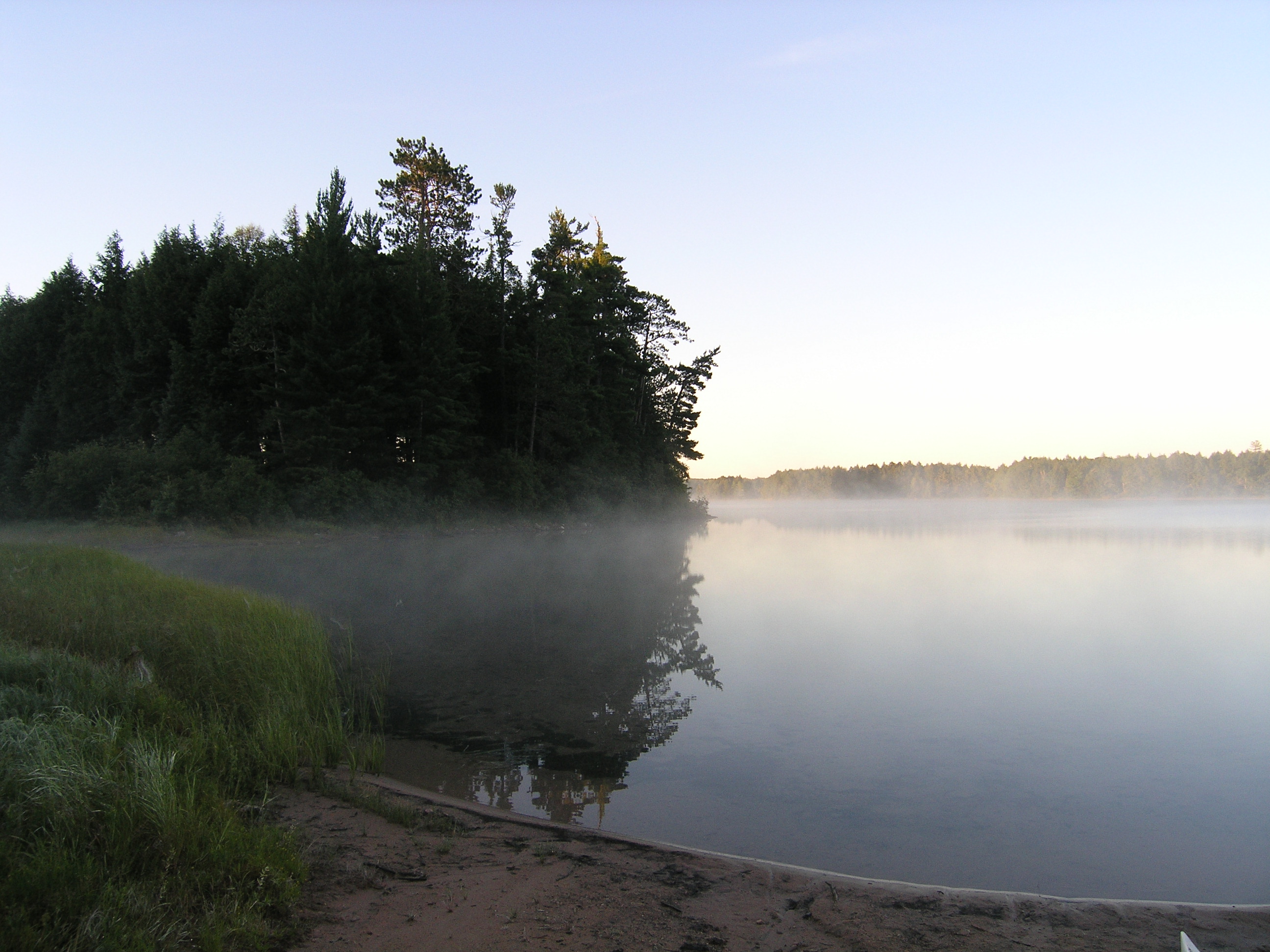
We're asking supporters to spare a few dollars if possible to help this overachieving member of the team purchase a new laptop that will speed up efficiency in the office and make her life a little easier. As a non-profit, Sierra Club works to serve both the environment and the people who occupy it. However, we need the critical tools to continue carrying out these missions. It's everyday people who make our everyday work fighting for environmental protection a success! Thanks for helping out and allowing Cecilia to do what she does best! Contact Jan O'Connell at 616-956-6646 or jan.oconnell@sierraclub.org to help, OR just send a check made out toSierra Club Michigan Chapter to 109 E. Grand River Ave, Lansing, MI 48906. Donations to the Sierra Club are not tax-deductible because they support our effective citizen based advocacy and lobbying efforts! You can also click here to make a secure donation online. EXPLORE AND ENJOY! SYLVANIA WILDERNESSSierra Club is committed to "exploring, enjoying and protecting the planet." The Michigan Chapter Update includes features on exploring and enjoying places in Michigan. Chapter Conservation Director Anne Woiwode talks about one of her favorite places: Sylvania Wilderness in the Ottawa National Forest
Please plan your trip carefully - make sure you obtain up to date maps, carry a compass and be prepared with whatever gear you will need for your planned activities, with a margin for error to protect against unforeseen mishapsdominated by ancient red and white pines surround the lakes, and at times visitors will delight in rare orchids and wildflowers. Common loonsclaim these lakes as their own, so during the summer months you can almost guarantee that you'll hear their haunting calls. Wolves, eagles, and ospreyare also found in the area. Visitors can enjoy this area all year round with skiing and snow shoeing as an option in the winter, as well as hiking trails. Most visitors enjoy the area from kayaks or canoes, starting their adventure at the carry down boat ramps on Clark Lake or Crooked Lake. Nearby outfitters are available to provide gear and guidance on enjoying Sylvania. Fishing is allowed with a state permit and special regulations for the area available at the Entrance Station. A limited number of well dispersed campsites are found within the wilderness in order to protect the delicate ecosystem, and must be reserved. Drive in camping is also available outside of the wilderness at the Clark Lake campground. Part of Crooked Lake is outside the wilderness and a handful of homes and a small non-motorized resort occupy part of the northern lobe of the lake. You may encounter small motorized boats outside the wilderness boundary on Crooked Lake. Visiting Sylvania wilderness should be on the list for everyone who wishes to know parts of Michigan that are virtually unchanged from the time of first human habitation. Our efforts under state and federal laws to protect exquisite areas like this pay off for generations yet to come, but vigilance is essential to defend and protect them into the future.
-----------------------------------------------------------------------------------------------------------
Here are Some Great Ways to Support Sierra Club Michigan Chapter and Get Engaged!
We welcome feedback on the Michigan Chapter Update - Contact us at michigan.chapter@sierraclub.org.Michigan Chapter - Sierra Club 109 E. Grand River Avenue Lansing, MI 48906 Contact Us Header photo Near Andrus Lake, Upper Michigan, by Beverly Wolf. | ||||||||||||||||||||||||

Showing posts with label biodiversity. Show all posts
Showing posts with label biodiversity. Show all posts
Sunday, June 7, 2015
Michigan Chapter Update - June 7, 2015










 Michigan Chapter Google+

Wednesday, April 3, 2013
How the Republican Party is pillaging Michigan’s natural resources
The Lansing City Pulse has published an article about the retreat from conservation by the Republican elected officials in Michigan:


By WALT SORG
How the Republican Party is pillaging Michigan’s natural resources
(Editor’s note: The writer was recently named to the board of the Mid-Michigan Environmental Action Council as a general public member.)
Si Quaeris Peninsulam Amoenam Circumspice If you seek a pleasant peninsula, look about you.
It is the official motto of a state now advertising itself as a “19-million-acre playground that’s Pure Michigan.”
Environmental and recreation organizations are leading a growing chorus of those worried that the playground is endangered by a Legislature and governor more concerned with short-term economic advantage than with long-term conservation of resources.
“Tragic and scary.” That’s how Haslett’s Anne Woiwode, executive director of the Sierra Club’s Michigan chapter, described a legislative drive to scale back the conservation mission of the Department of Natural Resources.
“They are saying Pure Michigan is only Pure Michigan when it’s convenient,” said Hugh McDiarmid, communications director for the Michigan Environmental Council.
At issue are a host of executive actions and legislative bills over the last two years that take direct aim at Michigan’s centurylong legacy of conservation and scientific management of public lands. They are issues that don’t often create headlines because, unlike years gone by, environmental issues tend to be less visible.
In the 1970s, McDiarmid noted, “you had laws such as the Clear Air and Clean Water acts because the threat was in our face: belching smokestacks, rivers catching fire, water supplies that caused cancer.”
“There was momentum back then. It was the beginning of Earth Day,” he said. “The effects (of environmental neglect) were visible, immediate and alarming. Now, it’s harder to see the damage that is being done.”
Two legislative efforts are at the top of the environmental threat list: changing the core mission of the Department of Natural Resources and diverting money from the state’s 37-year-old Natural Resources Trust Fund.
Legislation sponsored by U.P. Sen. Tom Casperson, R-Escanaba, would effectively take the state’s Department of Natural Resources out of the business of protecting natural habitats by outlawing the DNR’s nascent biodiversity program. The DNR program, which hasn’t yet been implemented, would designate portions of state land for special protections to maintain endangered species, both plant and animal.
“The pendulum has swung. It’s a cyclical thing. When people realize that it’s not a good thing to tear down these longstanding protections they’ll start paying attention and things will change.”
-Hugh McDiarmid, Michigan Environmental Council
The concept is anathema to some in the timber business who see it as artificially limiting access to state forests by private logging companies. Before his election to the Legislature, Casperson worked for his family’s U.P. log-hauling company.
The bill would also delete the protection of biological diversity from the DNR’s duties regarding forest management; require the department to balance its forest management activities with economic values; eliminate the requirement that the DNR manage forests in a way that promotes restoration; and delete from state law an earlier legislative finding that most losses of biological diversity are the result of human activity.
The bill passed the Senate in early March on a party-line vote, 26-11. It’s now in the House Natural Resources Committee.
“It is essentially a bill denying science, and a bill prohibiting scientific management of our forests,” McDiarmid said.
Casperson countered in a Detroit Free Press op-ed column that his bill would merely exercise legislative oversight “to ensure that real conservation is achieved while allowing use of the resources for recreation, tourism and economic activity.”
In his view, the DNR and environmental groups are the enemy.
“They want department bureaucrats to unilaterally develop policies that will result in public land being managed to prohibit human activity. This extreme philosophy promotes the misconception that humans, true conservation and protective measures can’t exist together.”
McDiarmid sees the potential for the opposite impact if Casperson’s bill became law.
Even the holy grail of sportsmen — deer hunting — could be adversely impacted.
“If the DNR was determined to manage a parcel of land specifically to encourage hunting opportunities for white-tailed deer, this legislation might open the door to a challenge. If you are going to make it illegal to manage land to protect an endangered species, why is that any different from managing it to encourage white-tailed deer for hunting opportunities?” A companion bill introduced in the state House last year positions the debate over biodiversity in a larger context:
a United Nations-led conspiracy to attack private property rights.
Really. State Rep. Greg MacMaster, R-Kewadin, introduced legislation last session that would prohibit, in his words, “any Michigan governmental entity from adopting, or implementing policy recommendations originating in, or traceable to, the United Nations’ ‘Agenda 21’ or any other international laws that would infringe or restrict, private property rights without due process. The legislation also prohibits certain transactions with certain entities that assist in implementing Agenda 21,” according to MacMaster’s press release announcing the bill. So far, it hasn’t been reintroduced.
Agenda 21 is a 1992 U.N. publication that focuses on the need to balance environmental and economic concerns in third-world countries. It is a non-binding, voluntary action plan which, according to the ICLEI — a global environmental advocacy group representing local governments — “does not advocate for abolishing private property or have any bearing on U.S. local and state land-use decisions. In other words, it isn’t being forced on anybody, anywhere, by any organization.”
The United States is a signatory to Agenda 21, which has become a rallying point for conservative Republicans. The 2012 Republican Party platform denounced it as “erosive of American sovereignty.” The U.N. approved it in the last year of the George H.W. Bush administration.
Woiwode called the legislation a “response to paranoia,” noting that the DNR’s biodiversity program does not deal with private land, but only poses potential restrictions on the exploitation of public lands.
Says Woiwode: “This (biodiversity management ban) is about confiscating publicly owned resources for the benefit of extractive industries and ensuring that there would be an emphasis on maximizing the timber industry’s profit from our public resources, maximizing the mining industry’s profit from our public resources. That is what I think just stuns people.”
Trust Fund diversions
The second alarm bell for environmentalists are efforts led by Casperson and Mac- Master — and supported by House Speaker Jase Bolger — to divert earnings of the 37-year-old Michigan Natural Resources Trust Fund for maintenance projects, specifically harbor, road and park maintenance.
Created by the Legislature in 1976, the trust fund takes a portion of royalties from mining and forestry operations for the public purchase and development of recreation areas and facilities. It has been used to buy forestland, build harbors and boat ramps, and also develop urban recreation opportunities.
It quickly built up reserves in the hundreds-of-millions of dollars, a pot of money that proved too tempting for lawmakers and governors. Twice, in the late 1970s and again in the 1980s, lawmakers dipped into the trust fund, diverting money to economic development. That prompted two constitutional amendments protecting the fund from future raids. Both measures creating the “conservation lock box” won by two-toone margins.
The first proposal, in 1984, “was wildly popular and passed in 81 of 83 counties,” noted John Greenslit, back then the first executive director of the Michigan Recreation and Parks Association and now Eaton County parks director.
Since its creation, the trust fund has purchased and preserved for future generations 135,000 acres of ecologically significant land and has funded 1,600 public recreation projects at a cost of $935 million.
“The original mission is still pertinent 37 years later, to use mineral extraction royalties to be reinvested in natural resources,” Greenslit said.
But Republican lawmakers want to change that mission to fund maintenance programs. A Senate bill introduced in February by Casperson would allow trust fund money to be used to dredge Great Lakes harbors. House Republicans are pushing for using the funds for other types of maintenance, including road repairs. The bill is in the Senate Natural Resources, Environment and Great Lakes Committee.
The trust fund reached its constitutional cap of $500 million in 2010. Any mineral revenues coming into the state now go into the Park Endowment Fund, which was established to provide a stable source of money for operating, maintaining and improving state parks.
Operating only on interest earnings, at today’s extremely low interest rates only about one in four projects is approved.
“The demand far exceeds the money available, and any diversion will just make things worse,” Greenslit said.
The fund’s mission, he said, is “acquisition and development only. Grant recipients must agree, as a condition of a grant, to pay for any needed maintenance in perpetuity.”
In its early years, trust fund money was used primarily in rural areas for the purchase of hunting habitat and development of waterrelated recreation facilities such as beaches, fishing habitat and boat ramps. Now more of the funds are directed to urban areas.
“There was a realization that a majority of the people in the state live in the southern part of the state,” DNR Grant Management Director Steve DeBrabander told the Detroit Free Press. “So there’s been an emphasis on urban projects.”
Last year’s projects grants signed into law last week by the governor include improvements along the Looking Glass River in DeWitt Township ($142,000); Patriarche Park playground reconstruction in East Lansing ($300,000); and walking trail improvements in Lansing’s Francis Park ($300,000) and Okemos’ Wonch Park ($45,000). (Editor’s note: The writer is a board member of East Lansing Rotary Club, which participated in the Patriarche Park grant application.)
Disappointment with the governor
Gov. Rick Snyder’s attitude toward the diversion — and the change in the DNR’s mission — will be critical.
Inquiries to the Governor’s Office on both issues were referred to the Department of Natural Resources. DNR spokesman Ed Golder said the department opposes diverting money from the Natural Resources Trust Fund based on an attorney general’s opinion that funding maintenance through the Trust Fund was unconstitutional.
Golder said the department has taken no position on passage of Casperson’s biodiversity bill, and took issue with concerns of environmentalists that the legislation cripples the DNR’s mission.
“We don’t believe the bill as it stands would prohibit managing state lands for biodiversity,” Golder said. “Instead, it would prohibit designating particular areas as biodiversity preserves through administrative rule or order. We think we can continue to accomplish the state’s biodiversity goals within the strictures of this legislation, even though some tools for that task would be limited.”
To date, environmentalists have been disappointed by Snyder’s performance. They say they were hopeful when he took office. Two of Snyder’s top advisers brought with them a long history of environmental and conservation activism.
Snyder’s senior policy adviser, William Rustem, was Gov. William Milliken’s point man on environmental issues in the 1970s, and coordinated passage of the 1984 ballot proposal enshrining the Natural Resources Trust Fund in the state Constitution. Dennis Muchmore, chief of staff of the Governor’s Office, is former executive director of Michigan United Conservation Clubs. His predecessor and longtime friend at MUCC, the late Tom Washington, was part of the environmental coalition that pushed through the initial Trust Fund legislation in 1976.
Despite the prominence of Muchmore and Rustem in the administration, Woiwode sees Snyder’s DNR as “more interested in getting permits out than in enforcement of the (environmental protection) laws,” and pointed out that the first two bills signed by the governor weakened clean air and water protection laws relating to agricultural operations.
McDiarmid sees a glass half full, calling Snyder’s environmental record “mixed.” He pointed to the Snyder’s strong advocacy of public transportation through creation of a Southeast Michigan Regional Transportation Authority and improved Amtrak and rail service through the state as positives.
‘We’ve lost track of our heritage’
Michigan’s conservation ethic dates back more than a century. It grew out of the aftermath of the exploits of 19th century lumber barons, who clear-cut tens of thousands of acres of northern Michigan timber.
“We created the state forest system with the goal of taking over lands that were tax reverted because they had been so badly destroyed in the logging era,” Woiwode said. “Three-quarters of our state lands came into public hands because they were tax reverted after timber companies clearcut them and left.”
The conservation movement gained momentum during the Great Depression when FDR’s Civilian Conservation Corps planted hundreds of thousands of trees throughout northern Michigan and built much of the state’s campground system.
From its beginning, the movement has been marked by alliances between business leaders and environmentalists beginning with Henry Ford’s championing of scientific resource management of U.P. timber. It reached its zenith during the 14-year administration of Milliken, a Republican governor who worked with a bipartisan legislative coalition that enacted some of the nation’s strongest conservation and environmental laws — including the bottle bill, clean water and clean air acts, and the Natural Resources Trust Fund. Milliken’s singular role in promoting urban conservation is recognized in the largest project of the Trust Fund: Development of the William Milliken Riverfront Park in downtown Detroit.
The tension between short-term economic exploitation of natural resources and conservation is a never-ending debate over balance. In Woiwode’s view, the pendulum has swung dangerously.
“We’ve lost track of our heritage,” she said. “We deliberately chose a strong conservation ethic — an ethic of restoring the land — so it was of value to everybody: hunter, hiker or logger. The lumber industry came back because of that history. They have lost track of that history. We should be protecting these resources, not just pillaging them today.”
McDiarmid concurred that economic opportunities are “a pretty big driving force,” but he maintains “it is a false choice between protecting the environment or having good jobs in mining or oil and gas industries. We can do both.”
“The pendulum,” McDiarmid agreed, “has swung. It’s a cyclical thing. When people realize that it’s not a good thing to tear down these longstanding protections, they’ll start paying attention and things will change.”
Greenslit says concerns that conservation chokes economic growth are vastly overstated. “It seems to be a political strategy to let you think the world is coming to an end. I don’t think the DNR is trying to buy up the whole state (through the Natural Resources Trust Fund). It’s a great natural resource we have to protect. The lost revenue is miniscule, but the story is very popular in the coffee shop and the bar,” he said.
“It is a political strategy that you run against Lansing, you run against departments like DNR. I don’t that is helpful in solving problems.”
With the anti-government, pro-growth-at-any-cost mindset of many in the Republican-dominant Legislature, the battle over preserving the “Pleasant Peninsula,” the “19-million-acre playground” could be the roughest battle lovers of Pure Michigan have fought in a century.
Sunday, March 24, 2013
State environmentalists blast forest biodiversity bill
Detroit News, Sunday, March 24, 2013
http://www.detroitnews.com/article/20130324/POLITICS02/303240305/State-environmentalists-blast-forest-biodiversity-bill
http://www.detroitnews.com/article/20130324/POLITICS02/303240305/State-environmentalists-blast-forest-biodiversity-bill
Legislation by state Sen. Tom Casperson, R-Escanaba, would prevent the Department of Natural Resources from classifying public tracts “for the purpose of achieving or maintaining biological diversity.” (Michigan Senate website)
Lansing — Michigan environmentalists are upset over a Republican lawmaker's bill to curtail the state's land management powers, claiming it's based on conspiracy theories about the United Nations.
Legislation by state Sen. Tom Casperson, R-Escanaba, would prevent the Department of Natural Resources from classifying public tracts "for the purpose of achieving or maintaining biological diversity." The proposal eliminates requirements the DNR promote forest restoration or continue giving special protection to unusual plants and animals.
Casperson said the legislation is an effort to rein in bureaucratic overreach, while acknowledging he is aware of a 1992 U.N. resolution on sustainable development that some conservatives claim could reduce property rights.
The bill passed the Senate and is under House discussion. This dismays opponents, who said it destroys the underpinnings of Michigan environmental law. They argue it is an extension of widening fears over the 1992 U.N. Agenda 21 resolution — a non-binding blueprint for ways to balance economic growth and environmental protection.
"There is an underlying fear and discomfort with a lack of control (Casperson) feels as a legislator over decisions that are being made," said Brad Garmon, conservation and emerging issues director for the Michigan Environmental Council. "Whether that comes from reading Agenda 21 conspiracy stuff, from working with state agencies over time, or from input from the timber industry… I don't know. But I think it's inaccurate to say there's no connection with (Agenda 21)."
Casperson bristled at such claims while acknowledging he has looked into Agenda 21.
"If that's what they're saying, they should read this," he said, waiving a list of DNR-proposed Biodiversity Sustainability Areas. "They're trying to paint me as a black-helicopter guy."
Agenda 21 came out of a U.N. environmental conference in Rio de Janeiro. Then-President George H.W. Bush was among the signers.
After years of obscurity, the agenda resolution has flared up among small-government adherents, conservative talk show host Glenn Beck and groups such as the John Birch Society. They see Agenda 21 as an insidious drive to raise concepts such as biodiversity — the use of varied plant species — above private property rights and are alarmed Michigan cities — including Dearborn, Ferndale and Ann Arbor — have adopted its concepts.
Environmentalists say their worries about the Casperson bill have roots in 2012 proposals.
State Rep. Greg McMaster, R-Kewadin, sponsored an unsuccessful bill to block governmental units from adopting any policy related to provisions in the 300-page U.N. resolution. It was similar to an ordinance Charlevoix County's commission adopted in October. Casperson talked with constituents about introducing a Senate version, but never did so.
McMaster still carries text on his website asserting Agenda 21 will, among other things, cause "elimination of private property ownership, population control … (and) relocation of people from rural areas into cities."
On the opposite side is Sturgis city commissioner and former Mayor Rob Sisson, who says there's little to fear from the ideas cities are free to use or ignore. An example is a recent land annexation in which Sturgis used cost-saving rain gardens instead of curbs and gutters, said Sisson, who's also president of ConservAmerica — formerly Republicans for Environmental Protection.
Casperson said he shares small-government conservatives' concerns that Agenda 21 could affect Upper Peninsula activities he treasures, especially hunting and fishing, but added his bill attacks stealthy DNR moves. He said he is battling an agency tendency to think "professors" and biologists should have more say over public land policies than taxpayers and state lawmakers.
His measure stirred emotional Senate debate. State Sen. Rebekah Warren, D-Ann Arbor, charged it would undo 100 years of effort to restore forests and make Michigan a laughingstock among scientists.
Environmentalists contend biodiversity has restored forests wiped out by early 20th-century clear cutting. If those areas had been restocked with ash trees alone, they'd be undergoing another round of devastation now by the emerald ash borer, Garmon said.
"Three quarters of our state lands were acquired after they'd been so badly logged and farmed that there were bereft of any plant life," added Anne Woiwode, director of Michigan's Sierra Club chapter. "The state took on the job of restoring those lands. The irony now is that Casperson wants to give the timber industry more access to those lands."
But Casperson, who ran his family's log-hauling businesses before joining the Legislature, has won praise from colleagues. On the website of the Wisconsin-based Great Lakes Timber Professional Association, group president Denny Olson said Casperson's bill constitutes a Michigan blockade against "an international push to set aside lands throughout the world and return them to their '(n)atural (s)tate'" through Agenda 21.
DNR officials have taken a neutral stance. "We think we can continue to accomplish the state's biodiversity goals within the strictures of this legislation, even though some tools for that task would be limited," department spokesman Ed Golder said.
Legislation by state Sen. Tom Casperson, R-Escanaba, would prevent the Department of Natural Resources from classifying public tracts "for the purpose of achieving or maintaining biological diversity." The proposal eliminates requirements the DNR promote forest restoration or continue giving special protection to unusual plants and animals.
Casperson said the legislation is an effort to rein in bureaucratic overreach, while acknowledging he is aware of a 1992 U.N. resolution on sustainable development that some conservatives claim could reduce property rights.
The bill passed the Senate and is under House discussion. This dismays opponents, who said it destroys the underpinnings of Michigan environmental law. They argue it is an extension of widening fears over the 1992 U.N. Agenda 21 resolution — a non-binding blueprint for ways to balance economic growth and environmental protection.
"There is an underlying fear and discomfort with a lack of control (Casperson) feels as a legislator over decisions that are being made," said Brad Garmon, conservation and emerging issues director for the Michigan Environmental Council. "Whether that comes from reading Agenda 21 conspiracy stuff, from working with state agencies over time, or from input from the timber industry… I don't know. But I think it's inaccurate to say there's no connection with (Agenda 21)."
Casperson bristled at such claims while acknowledging he has looked into Agenda 21.
"If that's what they're saying, they should read this," he said, waiving a list of DNR-proposed Biodiversity Sustainability Areas. "They're trying to paint me as a black-helicopter guy."
Agenda 21 came out of a U.N. environmental conference in Rio de Janeiro. Then-President George H.W. Bush was among the signers.
After years of obscurity, the agenda resolution has flared up among small-government adherents, conservative talk show host Glenn Beck and groups such as the John Birch Society. They see Agenda 21 as an insidious drive to raise concepts such as biodiversity — the use of varied plant species — above private property rights and are alarmed Michigan cities — including Dearborn, Ferndale and Ann Arbor — have adopted its concepts.
Environmentalists say their worries about the Casperson bill have roots in 2012 proposals.
State Rep. Greg McMaster, R-Kewadin, sponsored an unsuccessful bill to block governmental units from adopting any policy related to provisions in the 300-page U.N. resolution. It was similar to an ordinance Charlevoix County's commission adopted in October. Casperson talked with constituents about introducing a Senate version, but never did so.
McMaster still carries text on his website asserting Agenda 21 will, among other things, cause "elimination of private property ownership, population control … (and) relocation of people from rural areas into cities."
On the opposite side is Sturgis city commissioner and former Mayor Rob Sisson, who says there's little to fear from the ideas cities are free to use or ignore. An example is a recent land annexation in which Sturgis used cost-saving rain gardens instead of curbs and gutters, said Sisson, who's also president of ConservAmerica — formerly Republicans for Environmental Protection.
Casperson said he shares small-government conservatives' concerns that Agenda 21 could affect Upper Peninsula activities he treasures, especially hunting and fishing, but added his bill attacks stealthy DNR moves. He said he is battling an agency tendency to think "professors" and biologists should have more say over public land policies than taxpayers and state lawmakers.
His measure stirred emotional Senate debate. State Sen. Rebekah Warren, D-Ann Arbor, charged it would undo 100 years of effort to restore forests and make Michigan a laughingstock among scientists.
Environmentalists contend biodiversity has restored forests wiped out by early 20th-century clear cutting. If those areas had been restocked with ash trees alone, they'd be undergoing another round of devastation now by the emerald ash borer, Garmon said.
"Three quarters of our state lands were acquired after they'd been so badly logged and farmed that there were bereft of any plant life," added Anne Woiwode, director of Michigan's Sierra Club chapter. "The state took on the job of restoring those lands. The irony now is that Casperson wants to give the timber industry more access to those lands."
But Casperson, who ran his family's log-hauling businesses before joining the Legislature, has won praise from colleagues. On the website of the Wisconsin-based Great Lakes Timber Professional Association, group president Denny Olson said Casperson's bill constitutes a Michigan blockade against "an international push to set aside lands throughout the world and return them to their '(n)atural (s)tate'" through Agenda 21.
DNR officials have taken a neutral stance. "We think we can continue to accomplish the state's biodiversity goals within the strictures of this legislation, even though some tools for that task would be limited," department spokesman Ed Golder said.
(517) 371-3660
Tuesday, March 5, 2013
Senate undermines science with bad anti-biodiversity legislation
March 5, 2013
Contact:
Hugh McDiarmid: 248-660-4300
Lisa Brush: 734-996-3190
Bill could cripple efforts to manage land for resiliency, species protection
Shortsighted legislation redefining “conservation” and restricting the ability of state land managers to consider the diversity of Michigan’s flora and fauna when managing state lands and forests has passed the Michigan State Senate by a 26-11 party line vote this morning.
The Michigan Environmental Council and the Stewardship Network will seek defeat of the measure, Senate Bill 78, in the House of Representatives, and will urge Governor Rick Snyder to veto the bill should it reach his desk.
“This is terrible legislation,” said Brad Garmon, director of conservation and emerging issues for the Michigan Environmental Council. “It undercuts one of the Michigan Department of Natural Resources’ (DNR) chief missions – to protect and enhance the diversity and splendor of Michigan’s woodlands and forests.”
The bill undermines important tools used by the DNR to manage land, including the Michigan Endangered Species Act, weakening the state’s ability to protect unique Michigan assets that contribute to the economy and Michiganders’ quality of life.
“Scientific land management for biodiversity is a healthy and accepted philosophy that would be forced underground by this legislation,” said Lisa Brush, executive director of The Stewardship Network. “Removing science and biology from land and forest management is an irresponsible rejection of good natural resources practices."
Healthy forests provide diverse opportunities for recreation, flood and pollution control, and protection against invasive species and commercial activities like logging. Undermining the ability of the DNR to manage for multiple uses is a sweeping change in philosophy that fundamentally narrows the mission of the agency and puts our forests at risk.
Michigan can rightfully boast about our Great Lakes and our incredibly rich array of different plant, animal and natural communities. Protecting, enhancing and restoring that biological diversity in our forests, fisheries and dunes – among the most biologically diverse of any state in the country – is both scientifically sound and good economics. In addition to creating great places to camp, hike, hunt and see nature, managing lands for ecosystem health and genetic resilience ensures that our forests can survive new invasive species and other threats.
The intent of SB 78, introduced by lead sponsor Sen. Tom Casperson, is purportedly to stop implementation of a very specific program – the DNR’s proposed “Living Legacies” (often referred to as the Biodiversity Stewardship Area) program.
If that were its only target, it would still be bad policy. The Living Legacies program is not a “set aside” that would lock up land. It’s the opposite. It’s a management tool, designed to help the state and private landowners recognize and understand where intact and “functional” natural communities exist, or could most easily be reestablished. By enhancing these places through normal land management activities (including selective timber harvest and responsible outdoor recreation), Michigan would grow stronger economically as our great outdoors become more ecologically stable, more beautiful, more genetically resilient and more fun to play in.
Regardless, the bill is not specific to the Living Legacies program. It is a set of sweeping changes to the scientific principles that guide all state land management. Specifically, it amends current law to:
- Revise the definition of “conservation” with regard to biological diversity, removing key provisions regarding restoration, distribution and the “continued existence” of native species and communities.
- Prohibit the DNR or Natural Resources Commission from promulgating or enforcing a rule or an order that designates or classifies an area of land specifically for the purpose of achieving or maintaining biological diversity, and provide that no other state agency would be required to do so either (the only portion specifically targeting the proposed BSA program).
- Delete the conservation of biological diversity from the DNR’s duties regarding forest management, and require the Department to balance its management activities with economic values.
- Eliminate a requirement that the DNR manage forests in a manner that promotes restoration.
- Delete a legislative finding that most losses of biological diversity are the result of human activity.
SB 78’s stunning assumption is that the perpetual survival of native species and natural communities is not of critical importance to Michigan and its residents.
In addition to undermining Michigan’s commitment to common sense, science-based natural resources management, the legislation may also endanger other DNR programs like forest certification, and put at risk areas that have long enabled people to see and appreciate Michigan’s amazing natural assets.
Places such as Hartwick Pines, Haven Hill and others are managed in part based on their biodiversity values, but are also popular places to experience Michigan’s wildlife, history and cultural icons.
Subscribe to:
Posts (Atom)