
Showing posts with label oil spill. Show all posts
Showing posts with label oil spill. Show all posts
Sunday, August 21, 2016


Sunday, July 17, 2016
Sunday, June 19, 2016
Tuesday, May 10, 2016
Decades after pipeline spill, contamination could remain
Keith Matheny, Detroit Free Press 6:27 p.m. EDT May 9, 2016
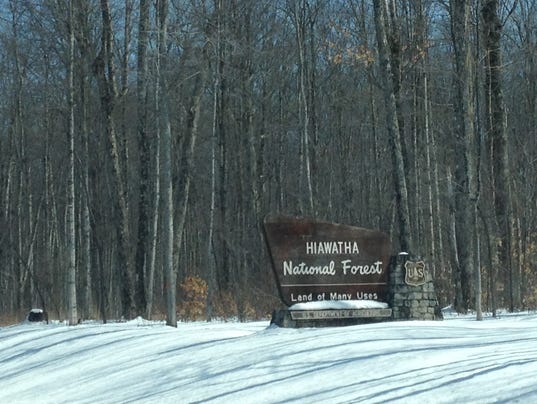
Despite Canadian oil transport giant Enbridge's assertions that it had cleaned up all but one of the five barrels of oil they said leaked from a pipeline in the Hiawatha National Forest in the Upper Peninsula around 1980, contaminated soil and groundwater persisted at the site for more than three decades.
And now, so do the questions. More ...
Sunday, July 19, 2015
Wednesday, July 15, 2015
WKZO Interview with Chapter Chair David Holtz on Enbridge Pipeline Task Force Report - July 15, 2015
Sierra Club Michigan Chapter Chair David Holtz was interviewed on WKZO Kalamazoo radio 590 AM. He took the opportunity to speak about the recent report from the Governor's task force on Enbridge's Line 5 pipeline that runs through the Mackinac Straits.
Thursday, June 11, 2015
To protect Great Lakes, Lansing must keep pipeline safety info public
David Holtz12:12 a.m. EDT June 11, 2015
 We need to know more about the oil pipelines that run under our Great Lakes, not less. But companies like Enbridge Energy Partners are supporting a move by Michigan’s Legislature to keep documents about the safety of oil-bearing pipelines out of the public eye.

As House Bill 4540 was introduced, oil industry representatives were offering testimony in Lansing, and beforehand Enbridge’s lobbyist was working to line up support from environmentalist groups. The law they support would ensure that Michigan citizens cannot know what companies like Enbridge are doing, or how they are doing it.
More ...Monday, January 5, 2015
Nuke plant reports 2-month oil leak into Lake Michigan
An oil cooling system on the turbine of a southwest Michigan nuclear power plant leaked oil into Lake Michigan for about two months, according to plant officials. More ...
Thursday, September 11, 2014
Coast Guard: We can't adequately respond to Great Lakes heavy oil spill

By Keith Matheny
Detroit Free Press staff writer
The U.S. Coast Guard and other responders are not adequately equipped or prepared for a “heavy oil” spill on the Great Lakes, according to a Coast Guard commander who is pushing for action.
A major oil spill could spell economic disaster for the states in the Great Lakes region, severely damaging the multibillion-dollar fishing and recreational boating industries and killing off wildlife.
Rear Admiral Fred Midgette, commander of the Coast Guard’s District 9, which includes the Great Lakes, said everyone involved in spill response on the Great Lakes is moving with a sense of urgency to come up with a plan to address a major spill.
But they haven’t found a way forward yet.
“When you get environmental groups, technical experts, oil spill recovery groups and regulators together, that’s how you find what’s the best way ahead,” Midgette said Tuesday at an international forum on heavy oils at the Detroit-Wayne County Port Authority attended by a cooperative of oil and chemical spill professionals.
Midgette said he was particularly concerned that response plans and organizations “are not capable of responding to heavy oil spills, particularly in open-water scenarios,” in an Aug. 20 memo to the Coast Guard’s Deputy Commandant for Operations.
That’s a serious issue, said David Holtz, Michigan chairman for the nonprofit Sierra Club.
“How can Michigan and the Great Lakes be in a position where two large oil pipelines are operating underneath the Straits of Mackinac, and the lead responders — the first responders to an oil spill — say they couldn’t respond effectively if something happened to those pipes?” he said.
“How can Michigan and the Great Lakes be in a position where two large oil pipelines are operating underneath the Straits of Mackinac, and the lead responders — the first responders to an oil spill — say they couldn’t respond effectively if something happened to those pipes?” he said.
The Coast Guard’s warning, based on its 2013 study, comes as Michigan Attorney General Bill Schuette and Department of Environmental Quality Director Dan Wyant convene a task force looking at petroleum pipeline safety throughout Michigan and the state’s preparedness for spills — including on the more than 60-year-old pipelines operated by Canadian oil transport giant Enbridge along the bottom of the Straits of Mackinac.
The Coast Guard noted other vulnerable locations, including,\ oil pipelines running under the St. Clair River between Marysville and Sarnia, Ontario, and near Niagara Falls and Buffalo.
The study also cited the interest by a Superior, Wis., company, Calumet Specialty Product Partners, L.P., and others, to establish a dock to facilitate Great Lakes oil shipping by barges out of western Lake Superior. The Wisconsin Department of Natural Resources dealt that effort a setback in January — requiring an involved environmental assessment — but it could eventually continue.
The Coast Guard Research and Development Center’s June 2013 final report was frank on the limitations in dealing with heavy oil that sinks below the surface and makes traditional skimming recovery methods ineffective.
“Current methods are inadequate to find and recover submerged oil, with responders having to reinvent the techniques on each occasion,” the report states, later adding, “Responses to recent higher profile submerged oil spills have shown responders have almost no capability in detection and recovery.”
Those high-profile spills include the July 2010 spill near Marshall, where an Enbridge oil transmission pipeline burst while carrying diluted bitumen or dilbit, a sludgy oil product thinned for transport typically using petroleum-based thinning agents.
The oil spill overwhelmed Talmadge Creek, a tributary to the Kalamazoo River, as well as a long stretch of the river. As the diluents evaporated, the heavier oil sank to the river bottom, combining with sediments, churned by the rushing water and complicating cleanup. Enbridge has spent more than $1 billion on the cleanup effort, which still is not complete more than four years later.
The Marshall spill showed that no community is ready to adequately respond to a heavy oil spill, said Beth Wallace, an environmental consultant who has worked to spotlight issues related to oil pipeline transport.
The Coast Guard report is “just a scary scenario for the Great Lakes,” she said. “I would hope that the governor, with the pipeline safety task force, will take a hard look at this.”
Oil companies need to do more in the way of transparency and financially providing for the necessary response if their products spill, Wallace said. And while the federal Pipeline and Hazardous Material Safety Administration oversees many petroleum pipeline safety issues, it is typically not there when a spill occurs, she said. That’s left to local communities’ first responders or the Coast Guard if the spill occurs on a major water body.
Complications include that oil companies use a variety of products as diluents in dilbit that can have varying effects on what happens with the oil when it spills, experts said — and the companies often keep those diluents a trade secret. Other factors affecting how a heavy oil spill behaves include temperature and water conditions.
Even finding and tracking submerged oil is a challenge, said Kurt Hansen, a project manager at the Coast Guard’s Research and Development Center at New London, Conn., specializing in oil spill response.
“Once the oil goes below the surface, that sets a whole new set of problems,” he said. “You’re going to have to figure out if it’s coming back up in tiny little droplets, because that’s going to need one set of recovery response and surveillance. Or, if it goes to the bottom in a clump, that’s going to need another set of response.
“And if it mixes with the silt and sand and dirt at the bottom, that’s going to need even a third set of response and information that you need.”
While responders are ready in most cases for surface oil spills, responding to a sinking oil spill requires pulling together equipment and response capability from a variety of locations — costing precious time, Hansen noted. What’s needed, he said, is pulling those capabilities together beforehand.
“Right now, there are no hard requirements for those systems,” he said. “Somebody’s going to have to look at the legal aspects of that, at what you can require.”
Said Holtz: “Speed is everything. So if the Coast Guard has to go to other places to get what they need to deal with a Great Lakes oil spill, that’s got to change. Either that or stop having pipelines in the Great Lakes.”
Contact Keith Matheny: 313-222-5021 or kmatheny@freepress.com. Follow on Twitter @keithmatheny.
Friday, June 6, 2014
Official Price of the Enbridge Kalamazoo Spill, A Whopping $1,039,000,000

Mon, 2013-08-26 14:26CAROL LINNITT

Official Price of the Enbridge Kalamazoo Spill, A Whopping $1,039,000,000

The largest onshore oil spill in US history - Enbridge'sruptured Line 6B that released nearly 3 million liters of tar sands diluted bitumen into a tributary of the Kalamazoo River in Michigan - finally has an official price tag: $1,039,000,000 USD. That's according tonewly disclosed figures released by Enbridge in aRevised Application to expand another one of its pipelines, the Alberta Clipper.
The total cost, which includes clean up and remediation, was topped off with an additional $3,699,200 fine levied by the Pipeline and Hazardous Materials Safety Administration (PHMSA). According to the docket, Enbridge violated several laws involving pipeline management, procedural manuals for operations and maintenance, public awareness, accident reporting and qualifications among others.
The spill, which went unaddressed for over 17 hours, was exacerbated by Enbridge's failed response according to the US National Transportation Safety Board (NTSB). At a hearing last year the NTSB's chair Deborah Hersman likened the company to a band of Keystone Kops for their bungled response, which included twice pumping additional crude into the line - accounting for 81 percent of the total release - before initiating emergency shut down. The disaster revealed numerous internal problems within Enbridge that were further described by the NTSB as “pervasive organizational failures.”
Communities along Talmadge Creek and the Kalamazoo River near Marshall, Michigan experienced sickness from the fumes associated with the spilled dilbit, or diluted bitumen, that blanketed miles of intersecting wetlands and waterways. Dilbit is a mixture of heavy oil from the Alberta tar sands and corrosive liquid chemicals, including benzene known to cause cancer in humans, that allow the viscous crude to flow.
The particular composition of dilbit is in part responsible for the spill's high costs - nearly 10 times more than any other onshore spill - because of dilbit from the tar sands which sinks in water, rather than floating like conventional oil. Enbridge, despite several attempts to clear the riverbed of remaining oil, spent nearly 3 years working on clean up of submerged oil.
As recently as March 2013 the US Environmental Protection Agency (EPA) ordered Enbridge toperform additional dredging in the Kalamazoo to clean up unrecovered oil along the river's bottom.
At the time of the spill Mark Durno, a deputy incident commander with the EPA told InsideClimate News “submerged oil is what makes this thing more unique than even the Gulf of Mexico situation.” Because Enbridge did not disclose to federal and local officials the contents of the pipeline, it wasn't until a week later that responders knew what they were dealing with.
PHMSA records show that the defect that led to the 6 and a half foot gash in the side of Line 6B was detected at least three times before the incident, although neither Enbridge nor the federal regulator felt the damage required repair.

In a recently-released report addressing Enbridge's Line 9, pipeline safety expert Richard Kuprewicz claimed Enbridge “has a culture where safety management seems to not be a critical part of their operation.”
Currently Enbridge has several proposed pipeline plans including the Northern Gateway Pipelinethat would carry tar sands crude to the British Columbia coast and Line 9 that would transport tar sands crude to the eastern seaboard. Both lines would open the coasts to export opportunities. Local communities point to Kalamazoo and sinking dilbit as reasons coastal ports should not consider carrying tar sands crude on oil tankers bound for Asian or other shores.
Enbridge's most current application, a 'Certificate of Need for a Crude Oil Pipeline,' was presented to the Minnesota Public Utilities Commission this month as a part of Enbridge's “ongoing efforts to meet North America's needs for reliable and secure transportation of petroleum energy supplies” via the Alberta Clipper.

The Alberta Clipper, or Line 67, will increase its capacity from 570,000 barrels per day (bpd) to 800,000 bpd should the application be approved. The application is the second phase of Enbridge's proposed capacity increase for the Alberta Clipper. The first application, filed October 8, 2012, initially proposed the line be increased to 570,000 from 450,000 bpd.
Currently the line carries crude oil from Hardisty, Alberta to terminal facilities in Superior, Wisonsin where the line meets up with Enbridge's Mainline System for distribution across the US.
Image Credit: EPA
Wednesday, April 9, 2014
Possible Oil Spill In Benzie County On Cold Creek
Possible Oil Spill In Benzie County On Cold Creek
Developing news in Benzie County where the Department of Environmental Quality is investigating a possible oil spill.
An oily sheen can be seen in the Cold Creek in downtown Beulah, not far from Crystal Lake.
Pictures show booms in the water, and an oily substance near the water's edge.
But the DEQ says they still aren't sure if it is in fact oil or something else.
The DEQ says the substance could be a number of things, but didn't want to elaborate until they've met with the team who's been on scene for the last couple of days. They will meet Tuesday.
9&10 News will bring you continuing coverage as new details come in.
Subscribe to:
Posts (Atom)