If a link in a post doesn't open correctly hold down the CTRL (or Control) key and then click on the link. Then choose "Open in a new window (or tab)".
Showing posts with label agriculture. Show all posts

Thursday, October 14, 2021

Members in Jackson Thank MI Sierra Club for Help on a Big Win!

 In early October Jackson residents living next to the Cascades Falls Park got a welcome surprise. They received an email about state funding and one line was a dream come true. It read, “Shirkey said the budget measure passed by the Senate includes $1 million for a Cascades Ponds dredging project to improve a beloved recreation spot."

The residents have been lobbying their county officials for years to dredge out the dammed up lagoons to stop flooding their neighborhood. So finally, the county had enlisted the aid of a friendly state politician, who helped push through funding.

In fact basement flooding has become so bad by 2019 that residents submitted photos of severe damage to the County Board. In some cases living room walls had split up the middle, In another, the main support beams had cracked the entire length of the home. Homes were settling, walls cracking. Mold was making people very sick. Property values plummeted.

The drainage stream for these five inter connected lagoons, a tributary to the Grand River, had been dammed up over a number of years. The last culvert pipe was closed off around 2000. But nearby residents had no clue. When a neighbor’s basement was flooded in 2005 by rising groundwater, old city storm sewers were faulted.

As luck would have it, one local resident in the flooded neighborhood had joined Sierra Club. She and another local member volunteered to help county residents to stop a factory farm (a CAFO) from operating in a wetland. They learned how to organize the community living around the CAFO site. With input from MI Sierra Club leaders, they learned about the DEQ, (now EGLE) an agency responsible for enforcing environmental laws, like the NPDES permit.  They helped township residents write up and practice giving public comments at loud and raucous township meetings. Finally the issue came to a head, and went before a judge. The CAFO was still able to open, but had to move all operations away from the wetlands and faced tougher restrictions. The Sierra Club members involved had completed their first crash course on community activism.

So when one club member's home near the park was flooded, the next project was born. In 2018, Fix the Cascade Park Lagoons Neighborhood Group was formed. Neighbors were organized, submitted public comments and documentation. Then a recommendation from MI Sierra Club helped to find legal help. Laws were researched and the park was found to be in violation for not having any NPDES permits for over 25 years of discharges, and the park water attractions were shut down.

Friday, December 6, 2019

We’re changing the rules for factory farms in Michigan


We’re changing the rules for factory farms in Michigan. But the common sense gains we’ve made are under attack by Big Ag. Even so, we know it’s not inevitable that factory farms continue to dominate our food supply at the expense of healthy and sustainable family farms. 

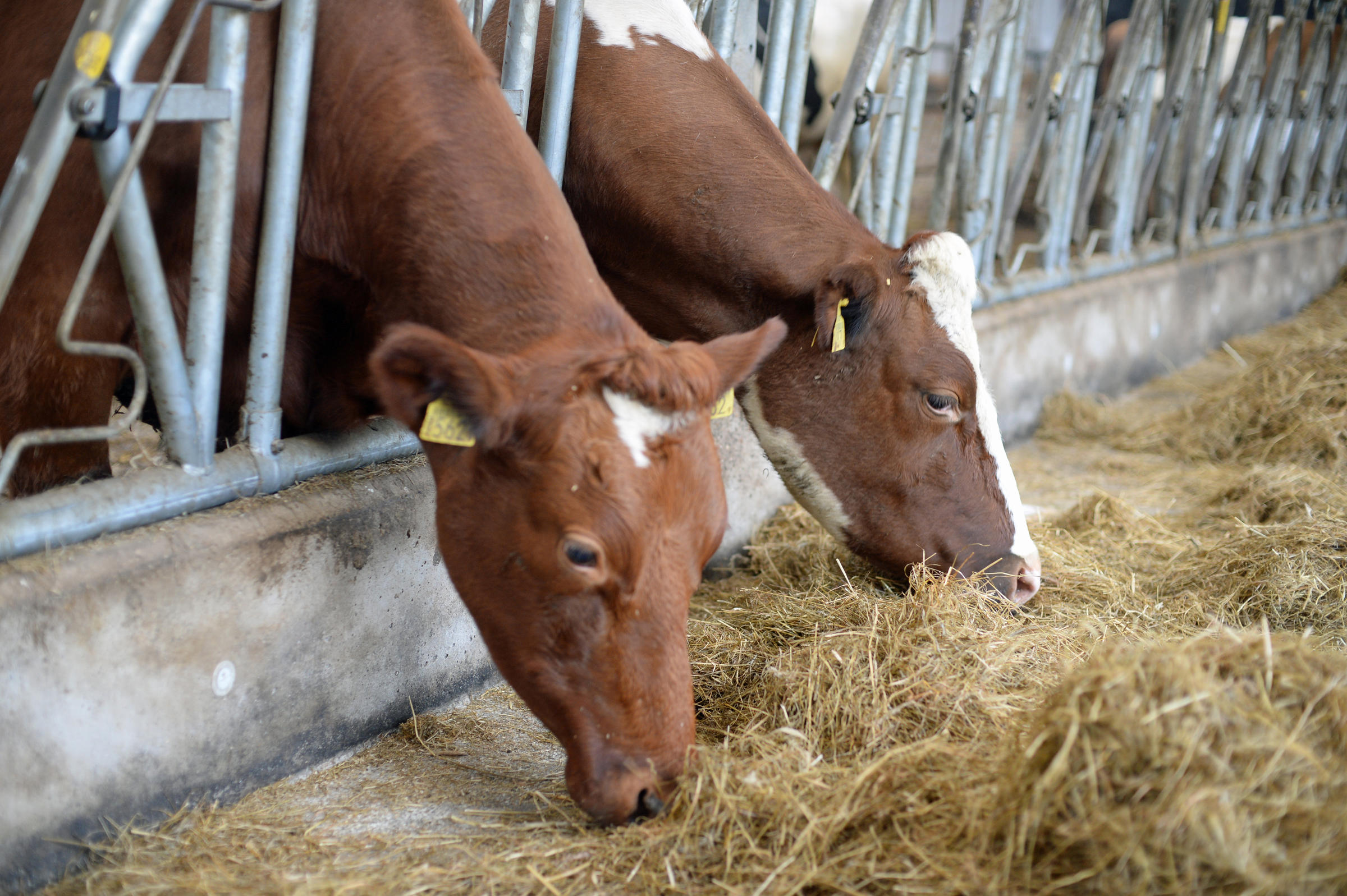
Michigan alone contains 272 factory farms, or “concentrated animal feeding operations” (CAFOs), as they are known in regulatory parlance. These operations are anything but small businesses with a few dozen cows or hogs. They’re industrial-scale operations with thousands of animals that produce enormous amounts of waste -- waste that contains a toxic slurry of manure, chemicals, pathogens, and nutrients like nitrogen and phosphorus. This waste runs off frozen and snow-covered fields, into our lakes and streams, and is a major contributor to the toxic algae blooms that shut down Toledo’s drinking water and make swimming and fishing in Lake Erie a potentially deadly experience.

Read more in Bridge ...

Wednesday, August 28, 2019

Michigan is tiptoeing around PFAS in dairy agriculture


LANSING, MI — Kay Fritz let the cattle out of the bag in Boston.
Fritz, a toxicologist with the Michigan Department of Agriculture and Rural Development (MDARD), told the National PFAS Conference audience that Michigan punted on testing an Allegan County dairy farm because it worried about killing the farmer’s business.

More ...

Friday, April 26, 2019

Here's one thing Democrats can do to win rural voters: Fight factory farms


Donald Trump is banking on riding his hardline stance on immigration to re-election in 2020. Tough talk of a wall makes headlines, but it’s a less discussed issue that could play a deciding role for voters in swing states and early primary states: the influx of factory farms and the devastating impact they have on people’s water, air and way of life. Democratic presidential hopefuls would be smart to clarify their stance on consolidated corporate agriculture, and soon.

In Iowa – site of the first caucus, and a state that went for President Obama twice and then swung soundly to Trump – more than 750 waterways are impaired. The cause? Chemical fertilizers and factory farm manure.

More ...

Friday, April 12, 2019

African-American farmers make up less than 2 percent of all farmers in the United States

A new report finds that racial discrimination within USDA programs is responsible for this decline.
APR 5, 2019

African-American farmers make up less than 2 percent of all farmers in the United States. They helm shrinking operations that are less profitable on average than those owned by their white counterparts—and, according to a new report, this decline is the direct result of discriminatory lending practices by the U.S. Department of Agriculture.  

Read more ...

Wednesday, September 13, 2017

The Great Nutrient Collapse

The atmosphere is literally changing the food we eat, for the worse. And almost nobody is paying attention.


Irakli Loladze is a mathematician by training, but he was in a biology lab when he encountered the puzzle that would change his life. It was in 1998, and Loladze was studying for his Ph.D. at Arizona State University. Against a backdrop of glass containers glowing with bright green algae, a biologist told Loladze and a half-dozen other graduate students that scientists had discovered something mysterious about zooplankton.

Read more ...

Thursday, May 25, 2017

Michigan CAFOs get subsidies despite mounting violations, report claims


Garret Ellison | gellison@mlive.comBy Garret Ellison | gellison@mlive.com 
Follow on Twitter
on May 25, 2017 at 7:30 AM, updated May 25, 2017 at 11:14 AM
ALLEGAN COUNTY, MI -- The Vande Bunte Eggs farm has racked up more than 200 state permit violations in the past three years.
Despite the high number of violations, no enforcement action has been taken against the farm, technically classified as a concentrated animal feeding operation (CAFO) that houses about 1.6 million chickens under the Konos Inc. corporate name at its Martin headquarters in Allegan County.
The farm has also benefitted from more than $1 million in federal subsidies.
That doesn't sit well with environmental groups who analyzed 272 large CAFOs in Michigan and concluded that accumulating pollution discharge violations haven't made a dent in the flow of federal dollars that subsidize crop insurance, livestock production and water conservation at state mega-farms.
"We think people should be able to run their business, but not pollute the commons and make other people pay to clean up their waste," said Hudson resident Pam Taylor of the Environmentally Concerned Citizens of South Central Michigan, who authored the report.
Taylor combined information from Freedom of Information Act requests, annual reports for individual farms and records accessible through an online portal on the Michigan Department of Environmental Quality website to create maps (see below) showing each large CAFO in Michigan, how many animals it houses, how much it has received in subsidies and how many permit violations it has.
The report focused only on industrial-scale farms that met the Environmental Protection Agency definition of a large CAFO, with DEQ permits to discharge wastewater to on-site lagoons that is usually applied to fields as fertilizer.
"This is the first time all of this information has been collated into one location," said Gail Philbin, director of the Michigan Sierra Club chapter, which released Taylor's report, titled "A Watershed Moment."

Read more ...

Drowning in manure

Drowning in manure 

By   4 HOURS AGO
I want to warn you that today, I’m going to be talking about poop. Specifically, more than 3.3 billion gallons of it a year, all of it produced in Michigan by what are euphemistically called “Concentrated Animal Feeding Operations,” or CAFOs.
Many of us call them “Factory Farms” instead. They are places where animals are crowded in what are anything but humane conditions to be fattened as quickly as possible for slaughter, or if they are cows, drained of their milk.
But beyond animal cruelty, what I’m concerned about is our drinking water. Three years ago, toxic algal blooms in Lake Erie left the water unsafe to drink for a few days.

Tuesday, January 31, 2017

Michigan Sierra Club Announces Legislative Priorities for 2017-2018

Michigan Chapter
Legislative Priorities for 2017-2018


Want to help us make these visions a reality? Take a minute to call your State Representative and State Senator - tell them which of our priorities you want them to work on.


Expand Our Use of Clean Energy and Create Green Jobs
Michigan currently obtains most of its electricity from fossil fuel sources such as coal and natural gas. These energy sources are highly polluting and are a large source of greenhouse gas emissions which contribute to climate change. However, clean energy such as solar, wind, and energy efficiency create green jobs, stabilize long-term energy prices, decrease our dependence on fossil fuels, and mitigate our impact on the climate. The Sierra Club supports policies that increase our use of clean energy, including but not limited to renewable energy standards, Energy Optimization Standards, clean contracts (setting a fair price to sell energy back to the grid), distributed generation (generating energy from small sources like rooftop solar), and expanding access to community clean energy projects. “Renewable” or “clean” energy should not be defined to include any fossil fuels, nuclear energy, incinerating waste, or unsustainable forms of biomass.

Fund Environmental Protection
Over the last decade, state funding for environmental protection has plummeted from about $100 million to $35 million. Aside from that, DEQ and DNR funding generated from fees and leases proves significant, but not adequate to support our environmental program. In addition, an over-reliance on permits and fees leads to these agencies being overly dependent on the industries they are monitoring. Combined, the budgets of these two agencies make up less than 1% of our state's allocations. Sierra Club strongly opposes efforts to further cut funding or keep it at the same levels because of its ability to significantly undermine environmental protection and community health. We support a steady increase in investment to the DEQ and DNR for the sake of safe drinking water, expanded recycling, recreation revenue, and the multitude of benefits these environmental programs offer. Our ground water, abundant surface waters, wetlands and shorelines are the foundation of our critically important tourism industry and our high quality of life.

Enact a Ban and Environmental Safeguards on Hydraulic Fracturing
The Michigan legislature must enact a Ban on High Volume Slickwater Horizontal Hydraulic Fracturing; in the absence of a ban, we need a Michigan-specific framework to protect the public and our water resources. That framework should require gas companies to follow all state laws regarding water withdrawals – something they are currently exempt from. We should require gas companies to disclose up front all chemicals to be used in the drilling process. The permitting process must require full public participation, which currently does not exist. Fracking is too dangerous for the Great Lakes State and it stands in the way of making progress toward reducing the impacts of climate change and achieving true energy independence. In addition to fracking, we need to ensure that other oil and gas extraction technologies such as acidization and well flooding are adequately regulated and monitored to avoid adverse impacts on our water resources and public health.

Defend Michigan’s Public Lands and Natural Resources
Even though our economy is struggling, the state’s travel and tourism business constantly flourishes, generating $955 million state tax revenue and employing 200,000 people. Michigan’s public lands and natural resources are essential to supporting tourism and should be properly managed to deliver the Pure Michigan promise. The Sierra Club fights for protection of public lands, a sustainable forestry plan, the use of biodiversity as an ecological goal, and the ability of the Department of Natural Resources to own and manage public land.

Mitigate Michigan’s Pipeline Problems
The Great Lakes and Michigan’s inland water bodies are threatened by aging pipelines and new pipeline proposals all across the state, carrying both oil and natural gas. Eminent domain is also causing conflicts between property owners and companies trying to build new pipelines. The legislature should enact laws to increase pipeline safety, disclosure, and emergency spill response planning. The Sierra Club is specifically working to stop the flow of oil through the Mackinac Straits carried by Enbridge’s Line 5 pipelines.

Protect Water Resources
Our Great Lakes hold one fifth of the world’s fresh surface water, but are threatened economically and ecologically by untreated sewage, industrial pollutants, invasive species, factory farm pollution, habitat loss, nutrient runoff, and degradation. The Sierra Club supports policies that make sure we have safe, clean, and affordable water such as banning aquaculture in the Great Lakes, banning the application of factory farm waste on frozen or snow-covered ground, investing in green infrastructure, sustainable wastewater and water infrastructure, and keeping public control of Michigan’s water. The Michigan legislature must enact laws that will reduce agricultural nutrient pollution which leads to toxic algae blooms in the Great Lakes.

End Environmental Injustice
Sierra Club believes that all people, regardless of racial/ethnic identity or socio-economic status, have a right to a clean and healthy environment and the right to effectively participate in their government to achieve that end. No communities should bear disproportionate amounts of pollution because of their demographics or socio-economic status. Local citizens who deal with this pollution on a daily basis must be given a voice and empowered to defend their communities. The lead contamination of drinking water in Flint that resulted from negligence and criminal conduct involving state officials demands justice for Flint residents in the form of safe, affordable drinking water and long-term response and support related to the health, education and economic impacts on the community. The Legislature and Governor must take responsibility for replacing all lead water pipes in Flint and appropriate the funds needed to fulfill this obligation. The full text of the Sierra Club’s Environmental Justice policy can be found at: http://www.sierraclub.org/policy/environmental-justice

Restore Citizen Oversight and Public Participation
For too long, concerned citizens have been ignored by our State Government. Lawmakers should restore accountability by reinstating independent, transparent bodies to oversee the DEQ and DNR like the bipartisan Water Resources Commission and Air Pollution Control Commission from the 1970’s and 1980’s. These would be made up of a balanced cross section of representatives of the general public, science, regulated industries and agencies. These bodies would oversee all aspects of the regulation, permitting and enforcement, providing an on-going public forum for both victims of pollution and those concerned about agency overreach to have their complaints reviewed and responded to.

Expand Access to Public/Mass Transit
The Sierra Club supports transportation policy and systems that minimize the impacts on and use of land, airspace and waterways, minimizes the consumption of fuel, and reduces greenhouse gas emissions. We support transportation planning that takes into account pedestrians, bicyclists and transit users. The full text of the Sierra Club’s Transportation policy can be found at: http://www.sierraclub.org/policy/transportation

Improve Access to Democracy
We are facing many proposals that would make it harder for individuals to vote, increase the role of money in politics, and decrease political campaign finance transparency. Lawmakers currently design their legislative district boundaries in a partisan way that undermines public confidence in government and reduces accountability to constituents. These proposals make it harder for individual citizens and the Sierra Club to be heard by elected officials. The Sierra Club advocates for getting the money out of politics, allowing no-reason absentee voting, increasing government/campaign transparency, creating an unbiased redistricting process, and stopping voter suppression.

Monday, February 22, 2016

Let’s reverse state’s slide on environmental protection

Gail Philbin11:36 p.m. ET Feb. 22, 2016
The spectacle of a Michigan city poisoned by a drinking-water crisis caused by cost-cutting surprised few, if any, folks working on environmental issues in this state. We couldn’t predict the horrific fact at the core of the Flint tragedy — that many, many children will live with lifelong consequences of lead exposure. However, we’re all too familiar with the Snyder administration’s disregard for public health and the will of the people.
A dangerous culture has taken hold at the Michigan Department of Environmental Quality (MDEQ). That culture de-emphasizes government transparency, regulatory enforcement and responsiveness to citizen complaints, and instead emphasizes budget reductions and voluntary measures to address significant problems.
More ...